

“Most things don’t stay the way they are very long.” from the novel ‘Canada’ by Richard Ford
When Jackie Wylie first came to our one-room schoolhouse in the tiny village of Portreeve, Saskatchewan, the times, as they say, were a’changing. It was September 1956, and we lived in two worlds, one old and one new. The old world was the pioneer infrastructure designed to allow the men and machinery of the early 20th century to cultivate the land, grow crops, and deliver them to markets. The old world was one-room schoolhouses, barn raisings, railway branch lines, and towns and villages spaced no more than ten miles apart. Before the age of gasoline and internal combustion engines, closely spaced communities allowed pioneer farmers to deliver grain by horse and cart, and each town supplied coal and water to keep the steam trains moving, carrying wheat to larger markets both east and west.
The new world was mechanization, scale, and efficiency. Large trucks, tractors, and combines allowed farmers to cultivate more land than ever before. Scientific advances in seeds, fertilizers, and farming practices were increasing yields. The age of high-speed travel and long-distance communication was beginning. The advances meant it was no longer necessary for prairie communities to be so close together, condemning many, Portreeve included, to a slow death. In 1956, the decline had begun, but you couldn’t see it yet. The only signal was that nobody was planning anything new for Portreeve. But all the businesses on Railway Avenue, the front street that ran east-west parallel to the railroad, were still open—the general store, the implement dealer, the mechanic’s garage, and the three grain elevators. And on September 10th, the first day of school in our one-room schoolhouse with the weathered brown siding at the southwest corner of town, the kids were buzzing.
I was in the eighth grade, and my girlfriends and I were excited for two reasons. The first was the joy of seeing old friends again after two months apart. In the summer, we, along with many other families, moved from our little houses in town to the farms that provided our livelihoods. I spent a lot of time with my horse, Donnie, but not much time with my friends. While we waited for our teacher to call us to order, we huddled in a corner and stole glances over our shoulders to determine who, among the boys we had known all our lives, had grown up in ways that were pleasing to us, and who had not. The second topic of conversation was a rumored new student, a boy, who was coming from back east, Ontario somewhere, to live with the Green family on their farm. Ray and Darla Green were his uncle and aunt.
The front of the room had a wall-to-wall blackboard, the teacher’s desk, a woodstove that glowed red on the coldest days of winter, and on the west-facing wall, the entry door. I was turned away from the door, facing my little knot of friends, when my best friend Joanie Carmichael elbowed me gently in the ribs. I looked at her with a frown, and she tilted her head, a quick movement, toward the door.
“Deanie,” she hissed. “It’s him.”
I started to turn, but heard “don’t look” in the same urgent hiss. I turned back to the corner and tilted my head.
“Why?”
All she did was shrug, so I maneuvered slowly until I could see the doorway and the new student who stood alone between the teacher’s desk and the door. It was a beautiful, late-summer day, and the morning sun poured through the east windows. All the activity in the classroom — kids milling around, dropping books and lunch kits on desks and benches — had stirred a sparse cloud of fine prairie dust, and the sun cut through it, dividing into golden, geometric rays that angled toward the wooden floor.
Jackie Wylie stood alone, and he held a grey cap at his waistband with both of his hands. He clenched the cap tightly, as if he were nervous or upset. He wore a plaid flannel shirt tucked into jeans that looked a size too big. The jeans were cinched tightly by a belt that also looked oversized. The end of it made it all the way to the belt loops at his side. The jeans were rolled at the cuffs, hiding the tops of brown engineer boots that were dusty, but unmarred. His hair was dirty blonde, straight, and longer than the tight cuts our farm and ranch friends all wore. Like us, the boys stood in knots, organized loosely by grade level, and observed the newcomer.
At first glance, I wasn’t sure if he was handsome or not. His face was thin; his nose long and narrow, but straight. I decided I liked the shape of his jaw and was trying to guess the color of his eyes when he turned his head toward our group and met my gaze. I was caught. I couldn’t turn away without admitting I was looking, so I stood and looked back. He only looked our way for a few seconds before turning away, but when he did, I caught myself inhaling deeply, as I’d quit breathing while I stared. My face felt hot. I was sure my freckles, already prominent, were about to jump off my face. Blue, I thought. I think his eyes are blue.
Joanie started whispering as soon as I turned back to the group.
“My brothers said he got in a lot of trouble in Ontario. That’s why he’s out here. His uncle and aunt are supposed to help him be good, or something.”
Mary Hansen, a third member of our eighth-grade tribe, was a half-foot shorter than the rest of us. Her hair was a dark, chestnut brown that stood out against pale, almost translucent skin. Her head always seemed a little too big for her tiny body, but she had good cheekbones, a wide mouth, and eyes so blue you wondered if they were real. She was less of a tomboy than the rest of us, and she listened to Joanie with a shocked expression.
“What did he do?” she asked.
Because Joanie had older brothers, she was our usual source for rumors and goings-on among our more senior classmates.
“I heard lots of stuff. Like a stolen car, burglary, vandalism.”
“Fights?” I asked.
Joanie thought for a second, then shook her head. “I didn’t hear anything like that.”
Mary looked confused. “But, you should go to jail for those things. Not be sent off to do them somewhere else.”
“I don’t know what to tell ya. Apparently, the fresh air and farm work,” Joanie stopped and raised her chin, shaking her hair like a movie star, “and the fair maidens,” she grinned, eyes flashing, “are supposed to turn him away from his former bad behavior.”
I rolled my eyes. Joanie was about to challenge me when our teacher, Mr. Bell, stepped out of the coat room and stood in front of his desk. “Good morning,” he said in a clear, loud baritone.
Our teacher’s name was Henry Bell. He wasn’t much older than the oldest boys and girls in the school, and he lived with his parents on their farm north of Portreeve. With only a high school diploma earned at the humble, one-room schoolhouse he now led, and a teacher’s certificate attained in six months at a teacher’s college in Swift Current, Henry Bell was not the experienced, well-credentialed educator that parents hoped would shepherd their children through science, math, English, and history.
Given that tiny communities like Portreeve were lucky to have a teacher at all, one could be forgiven for thinking that we took what we could get. But that was not the case. Henry Bell was the best teacher I ever had. Unlike most of my friends, when I started the ninth grade, my parents sent me to board with a family in Swift Current and attend an actual high school with hundreds of students. Among all the teachers I encountered, most of whom were very good, none was better than Henry Bell.
A few years later, when I was attending the big high school in Swift Current, we studied some American history. We focused on the years surrounding the U.S. Civil War, and we read about Abraham Lincoln. As a portrait of Lincoln took shape in my mind, I sensed something familiar. On an evening when I read about how Lincoln was largely self-taught, a man who read books constantly, often walking miles to borrow them from friends, I understood the connection I was feeling. Henry Bell is like Abe Lincoln, I thought. During the few years I was in his schoolhouse, he was constantly driving back and forth to Swift Current to get books from the Public Library. He read history books, political science, treatises on economics, classic literature, science tomes, and math texts. And everything he read, or everything appropriate, entered our classroom by way of his enthusiasm and skill in passing on the knowledge he so voraciously consumed.
He should leave Portreeve and be a politician like Lincoln, I thought at the time. Some years later, after he had moved to Alberta, he did just that. Although never reaching Lincoln’s great heights, he was a member of the Alberta legislature for many years and held many ministerial posts along the way. I trust he was as good a representative of his constituents as he was a teacher, but that’s a high bar.
In our schoolhouse, Henry Bell’s commanding voice was a signal for calm and attention, but on the first day of school, it took more than “good morning” to get us settled down.
“Ladies, gentlemen,” he started again.
Joanie said, “We’ll talk more at recess,” as our knot of girls broke apart and drifted toward desks in the front left corner of the room. Mr. Bell preferred us to sit in groups organized by grade level so he could work with different groups and not disturb others in the classroom. As I sat, I watched to see where Jackie Wylie placed himself, but he didn’t move. He moved out of the way to allow students to get where they were going, but did not take a desk himself. He stood quietly by the window, his hat still clenched in both hands. His eyes were cast down, and his shoulders hunched up and forward. I thought he looked like he was asking forgiveness, and seemed about the furthest thing from the hell raising reputation he supposedly owned.
When we were quiet in our seats, Mr. Bell stood beside his desk and drew in a breath. Like a stage performer, he paused before speaking, letting anticipation build. Outside the east windows, a meadowlark warbled.
“Welcome, students,” he began. “I trust you enjoyed the warm months of summer, and I pray that the harvest that supports all of us in our small community is bountiful. I’m sure you have all returned to this classroom with the inspiration and dedication to learn as much as possible and to complete the necessary work to progress to the next grade. In that endeavor, I will teach and tutor to the best of my ability.”
“Now, it seems the first order of business is the introduction of a new student. We have here, standing off to the side …” Mr. Bell extended his left arm and encouraged Jackie to join him at the front of the classroom. “A Mr. Jackie Wylie, who joins us all the way from a town almost at the very southern tip of Canada. Now, who in here can tell me the industrial city that is at the very southern tip of Canada?” It was characteristic of Mr. Bell to turn every conversation and every interaction into a learning opportunity. He waited with his left hand on Jackie’s right shoulder. We cast our eyes left and right, hoping that someone had the answer. Betty Forester, a grade eleven student we all thought was the smartest person in the room, reluctantly raised her hand.
“Miss Forester?”
“I think it’s Windsor, sir.”
I suspected Mr. Bell hoped that someone other than Betty answered the question, but he didn’t show it. He smiled and nodded as she answered.
“Correct. And where are you from, Mr. Wylie? Jackie kept his eyes cast down and mumbled a response none of us could understand. Mr. Bell offered encouragement.
“I’m afraid you’ll have to speak up, Mr. Wylie. Perhaps if you look at the class as you speak.”
Jackie raised his head, but kept both hands on his cap. “Essex, Ontario,” he said. “It’s about fifteen miles east of Windsor. My dad works in the Ford engine factory there.”
“Thank you, Jackie. Is there anything else you’d like to say about yourself? Any hobbies or interests you want to share?”
Jackie shook his head, looking like he would rather be anywhere else in the world, then stopped and straightened up a bit. “I like cars,” he said.
Mr. Bell nodded to acknowledge the detail. “I’m sure several others in here share your interest. Now, Jackie will be joining our eleventh-grade group, so let’s see if we can shuffle around a bit and free up a desk in the right part of the room.”
At lunch that day, Mary, Joanie, and I sat on a wooden bench with our backs to the south side of the school. Harvest was still in full swing. In the distance, a green combine looked like a bug crawling along the edge of the world. Behind it, a large plume of dust and wheat chaff rose quickly, then trailed off on a soft wind coming out of the west. Jackie was standing with a group of boys by the small group of dusty, bug-splattered pick-up trucks that a few of the older kids drove to school. The three of us munched on sandwiches our mothers had packed in our lunch kits. Jackie Wylie was our main topic of conversation.
“I don’t know,” I said. “He doesn’t seem like a bad kid. He seems more shy than anything.”
Joanie looked at me knowingly. “Did either of you see ‘Rebel Without A Cause,’ with James Dean?
I shook my head, and Mary said, “Of course not.”
“Well, last year, when we went to Swift Current for Christmas shopping, my brothers and I were supposed to keep occupied for a couple of hours while our parents shopped for us. We were walking down Central Avenue, all bundled up, and happened to walk by the Lyric Theater. One of my brothers glanced up and noticed that “Rebel Without A Cause” was scheduled to start in about fifteen minutes, a matinee showing. No one told us we couldn’t go to a movie, and we all had a little money left over, so we went.”
I squinted into the sunshine, thinking. “Are you saying Jackie Wylie is like James Dean?”
“He could be. Maybe he comes from a bad home. Or maybe his parents didn’t understand him.” Joanie shrugged. “Who knows. In the movie, Jim, played by James, makes up with his parents at the end. It’s kind of an unhappy, happy ending. Maybe the same thing will happen to Jackie. He gets sent out here, which he’s unhappy about, but he doesn’t get in trouble anymore.”
Mary sighed. “I wish my parents would let me go to movies like that.”
Joanie was in the midst of telling us that there was no way her parents would have let her go to the movie if she had asked them, when Mr. Bell appeared on the steps of the school and rang the handbell that signaled the start of our afternoon studies.
On the second day of school in September 1956, Jackie Wylie was a different person. It was no more than a quarter mile from our house on the southern edge of Portreeve to the schoolhouse. As I walked west toward school, each step lifted a small puff of dust that settled on my shoes. There was a thin line of yellow grass growing down the center of the road between the tire tracks; a grasshopper lifted out of it and flew, wings rattling, into a shallow ditch. When I arrived at Broadway Street, I stopped and waited for an approaching truck to pass before turning south toward the school. As it neared, I realized it was a vehicle I hadn’t seen before. It was red and gleaming, not dusty or mud and bug-splattered like most of the cars and trucks I saw daily. It was moving slowly as it passed, and I heard the low rumble of its engine. The window was open, and Jackie Wylie rolled by, wearing his gray cap, one hand on the steering wheel, and one slender, tanned arm resting on the windowsill. I was wide-eyed as he passed, and he looked my way with a satisfied smirk. I stood still for a moment more, waiting for the dust to roll downwind, then headed toward the school. There was a knot of boys gathered around the red truck as I walked toward the door.
Joanie and Mary were standing in the same corner as the morning before. I started when I was still halfway across the room.
“Did you see …?”
Joanie, our source of all upper-class gossip, answered before I could finish my question.
“It’s a brand new Ford F100, fiesta red, with a 272 cubic inch V8, and a three-on-the-tree, whatever that means. Apparently, because his dad works for Ford back in Ontario, he was able to get a special deal on it. The dealer from Swift Current drove it up here yesterday afternoon. My parents say it’s a big mistake, rewarding someone for bad behavior, but I guess they felt bad for sending him out here to live with us heathens, so they gave him a gift.”
I was astonished. I couldn’t think of one person I knew, adults with jobs and businesses and farms, that had a truck as nice as Jackie Wylie’s. When the bell rang, and we settled into our desks, I couldn’t shake the feeling that the natural order and rhythm of our small community had just been upset. If there was a common creed among the first generations of European settlers who learned how to make a living on the Canadian prairies, whether they were Catholic, various flavors of Protestant, or Eastern Orthodox, it was the discipline of delayed gratification. First came hard work, thrift, and fervent prayers for rain in the summer, dry weather for harvest, and good grain prices at the elevator. Adding to the sense of disruption was Jackie’s demeanor in the classroom. He looked lost on day one, but on day two, he slouched in his chair and looked bored. More than once, while Mr. Bell worked through a math problem on the chalkboard or read from a novel he assigned for English class, Jackie sighed and shifted his desk, causing the legs to scrape loudly on the wooden floor. Mr. Bell let the first two go. Each time after, he paused in the middle of his lesson and lifted his eyes toward Jackie’s desk. Jackie seemed unimpressed. I had never seen someone act so defiantly in Mr. Bell’s classroom.
1956 was a banner year for crops. The summer rains were sufficient, and the harvest weather stayed dry and warm. Before the swathers and combines started their work, the durum stood nearly as high as my shoulders. In the grain elevators, as the trucks tilted their beds skyward, and the golden kernels poured through the grate, the agents took a scoop from the flood and tested it for moisture and quality. Throughout that fall, the test results were communicated with winks and knowing nods—unspoken confirmation of the harvest’s quality. Compounding our good fortune was the peace and prosperity of the Eisenhower era in American politics. Growth and optimism were the words of the day, and the demand for Canadian grain, in North America and abroad, rode that swelling wave.
In mid-September, there were a few sloughs and low spots still to be harvested, but most of the work was complete. To celebrate, the village planned a town picnic to be held in the Great Sandhills south of Sceptre. On the rare days when families set aside an afternoon for recreation, the Sandhills were a favorite destination. In our science class, Mr. Bell taught us that glaciers a mile thick once covered the farmland we called home, and as they advanced, they ground some of the bedrock into a fine sand, called rock flour. Then, about 12,000 years ago, the Earth warmed, and the glaciers began to retreat. As the ice melted, huge lakes of meltwater collected at the toe of the glacier, and all the sand and rock flour were carried down into these lakes and deposited. When the lake drained, the winds that flowed across the emerging prairie pushed the rock flour into tall dunes that we loved to climb.
The picnic was scheduled for a Sunday. After church, kids sprinted across Portreeve so they could change into the clothes they would wear to the picnic. The children who lived on farms outside of town waited impatiently while their parents strolled toward the cars and trucks that would take them home to do the same. I ran to the house and banged through the front door. I was changed before the door opened to admit the rest of my family. Forty-five agonizing minutes later, we had the car loaded with a bag of sandwiches, a tray of cut-up vegetables grown in the garden out at the farm, a big bag of potato chips, a jug of cool water, and, as a special treat, a soft drink for each of us—Fanta orange and Fanta grape for me and my brothers, Coca-cola augmented by a small flask of whisky for our parents.
The best picnic spot in the Sandhills was twenty-five miles away, directly south of Sceptre. As we drove, first west on the graded gravel of Highway 32, and then south on the dirt road leading away from Sceptre, each vehicle ahead and behind lifted a grey rooster tail of dust that drifted slowly south and west. Each car or truck stayed well behind the vehicle in front to give time for the air to clear.
As you enter the Great Sandhills and approach the picnic spot, the landscape changes from flat, cultivated fields to hillocks covered in native grass, sage, and cactus. In the small, sheltered draws, there are stands of aspen and white birch. The road, which is straight as an arrow in the cultivated land, begins to bend and curve around the small hills. In the roadbed, the organic soil of the cropland, charcoal grey in the dry wind of September, becomes a fine mineral sand, grey-tan in color, and so fine it sifts through door and window seals as if they don’t exist.
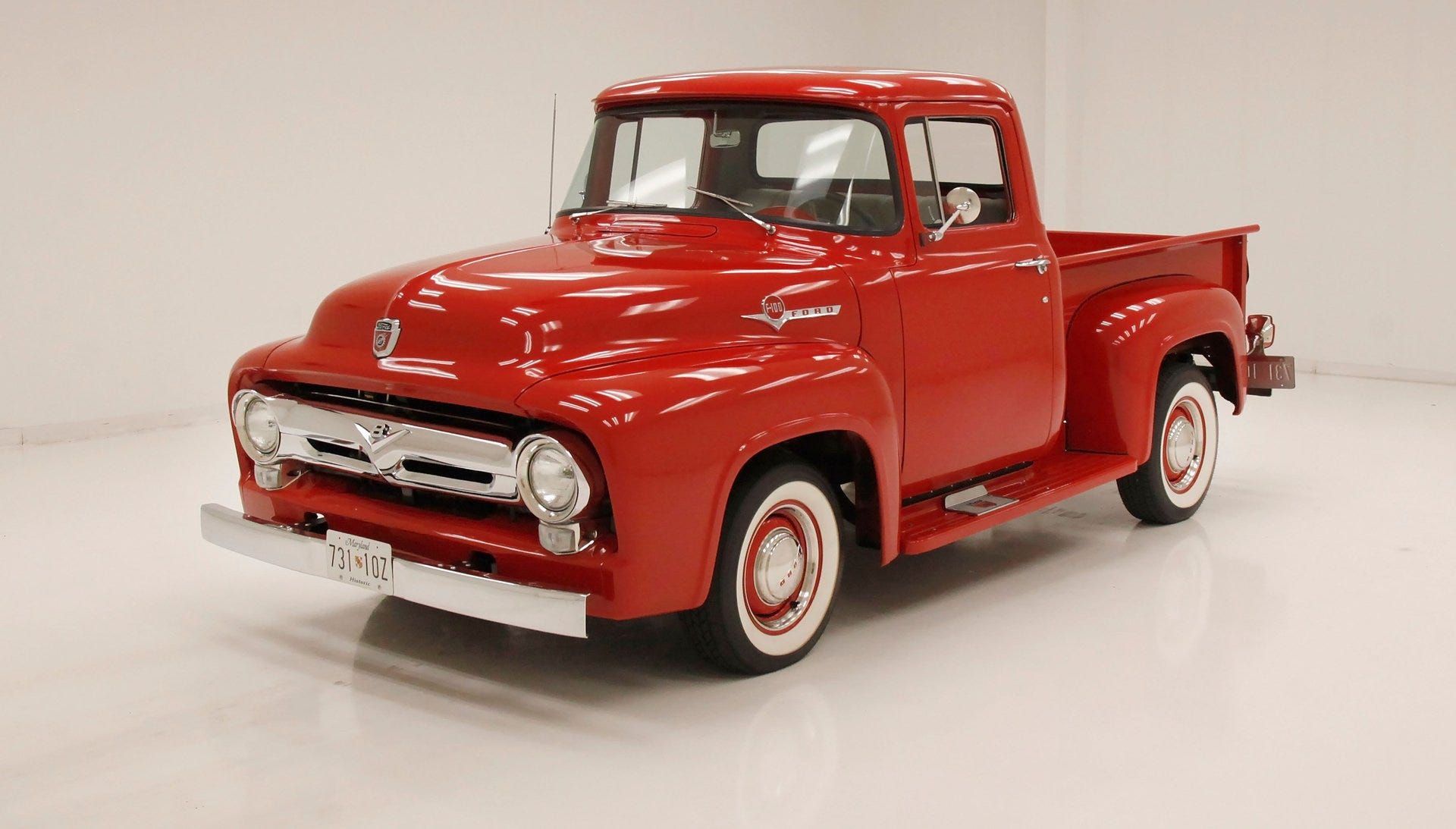
When we parked, I could see a crowd of kids on the tall dune to the west. Before I joined them, I helped to carry a folding table and chairs to a copse of aspen trees that offered some shade. The sun filtered through their yellow leaves, dappling the ground beneath. Chores finished, I took off my shoes and sprinted toward the big dune. As I ran, I noticed Jackie’s truck parked beneath a birch tree. A fine layer of dust coated the shiny red paint.
At the top of the dune, I found all my friends. Mary, in a white dress entirely unsuitable for the day’s activities, and Joanie in blue capri pants and an old t-shirt that used to belong to one of her older brothers. I wore a faded blue button-up blouse my mom had given me, and plaid pants that were my favorite for horse riding. The boys our age, who were mostly shorter than us and not that interesting, in our estimation, gathered in a tight knot, while the older boys, who did attract our interest, ranged widely over the top of the dune, performing stunts to try and impress the girls who were their peers. Thanks to Joanie, whose thick, brown hair, flashing eyes, and athletic build made her look older than she was, a few of the older boys’ demonstrations were directed our way, and we watched and tried to look unimpressed. The main activity was jumping off the steep, lee side of the dune. The prevailing winds from the west sculpted a small cornice of sand and a steep, east-facing slope beneath it. The boys backed up and ran as fast as they could to the cornice, launching themselves into space, somersaulting and spinning in the air. They landed far down the slope, the sand jumping on impact as if hit by a cannonball. We cheered for the longest jumps, and the fanciest.
Jackie on the dune was not like the sullen Jackie I observed in the classroom. Climbing, running, and jumping in the warm sun was strenuous, and many of the older boys took off their shirts to stay cool and show off. Jackie’s torso was pale compared to the other boys, most of whom had worked in the sun for months. But his shoulders were square, and the waistband of his jeans, which were rolled up to the middle of his calves, was loose around a flat stomach. His long hair streamed behind him when he jumped, and he flew as far as anyone. Later, I sat with Joanie’s family and ate my sandwich along with deviled eggs Joanie’s mom had set out in a baking dish. Jackie was leaning back against the hood of his truck with a small group of boys and girls around him. He was smiling.
“Look,” I said to Joanie. She followed my gaze.
“What?”
“He’s smiling.”
“Who is?”
“Jackie.”
Joanie looked at me suspiciously. “You know he’s too old for you, right Deanie?”
“I know that,” I scoffed, though Joanie continued to look at me through narrowed eyes. She mumbled something difficult to hear, but I think she said, “I’m not sure you do.”
As Halloween approached, a high gray overcast replaced the sunny warmth of early September, and a steady west wind rattled skeletal branches in the elm trees and caragana hedges that surrounded the town lots. The great migrations were in full swing, and millions of Canada Geese, Sandhill Cranes, and Mallard Ducks lingered on the prairie, fattening up for the long journey south to rice fields and marshes along the Gulf coast. Each morning, as I walked to school, I listened to a chorus of honks and clucks as the geese flew from their roost on the South Saskatchewan River to feed on kernels of grain not captured by the combines. The cranes flew with them, sometimes forming part of the same V-formation. Their loud, raspy trills had a prehistoric quality, making me wonder whether I would look up to see a flock of pterodactyls in flight. Silhouetted against the gray sky, their formidable wingspans added to the effect.
We loved Halloween and spent weeks working on costumes. My little brothers, who were just a year apart and could almost pass for twins, were dressing up as cowboys from the Wild West, with hats, six-shooters, boots, and chaps. I planned to dress as Dorothy from ‘The Wizard of Oz,’ which was my favorite movie. I had a white blouse with puffy sleeves, and my mother sewed a blue gingham dress with material we bought in Swift Current. She also contributed an old pair of shoes, which we spray-painted with the darkest, ruby-red color we could find. My hair wasn’t long enough for a pair of luxurious braids, like Dorothy wore, but it was red, and we divided it into two ponytails secured with bows that were the color of the blue checks in the gingham dress. In all, the girly costume was a big departure from my normal, tomboyish attire, and I loved it.
Perhaps the moon’s orbit placed it particularly close to the Earth in the fall of 1956, because all the kids in Portreeve went a little crazy that year. Jackie reverted to his sullen, low-level antagonism in the classroom shortly after the picnic in the Sandhills, and added to his bad-boy reputation by racing down the big hill west of Sceptre at a speed rumored to be close to 100 miles per hour. One of the R.C.M.P. officers from the Leader detachment happened to be sitting behind a granary at the base of the hill and was startled into action by the red truck that hurtled past. The speed of the truck was so great, and the plume of dust behind it so thick, that Jackie and his two passengers, a couple of the twelfth-grade boys, were through to the east side of Sceptre before they even knew a police officer was trying to chase them down. Information on the speeding incident came from Joanie, of course, whose oldest brother, Stan, was one of the twelfth graders in the truck with Jackie.
“Stan said the mountie was so mad he could hardly speak. He made them leave the truck and ride in the police car with him. Then, he drove them back to Jackie’s farm and gave them a real talking to in front of Jackie’s uncle and aunt. He said he could put Jackie in jail if he wanted.”
We were gathered in our usual corner of the classroom in the minutes before Mr. Bell would start classes for the day. The October mornings were cold, most of them below freezing. A couple of the older kids were adding wood to the stove at the front of the room, but our corner was still chilly. There was no fat on Mary’s small frame, and she shivered.
“What’s going to happen?” she asked.
“A fine is all. Jackie’s uncle said he would pay it as long as Jackie works it off.”
I started to ask about punishments at home, like whether Jackie would still be able to drive his truck, when we all heard a familiar rumble outside the window. The red truck rolled up, and Jackie climbed out with his face already set in the combination of boredom and defiance we all knew from the classroom. I watched while he walked from the truck to the door of the schoolhouse. He kicked the dirt with every step, raising little clouds of dust and spotting his boots with pats of prairie soil he would leave behind on the schoolhouse floor. I turned to Mary and Joanie.
“Looks like nothing’s changed.”
In the 1950s, Portreeve had electrical lines, but no civic plumbing or freshwater systems. There was a well in the center of town where citizens obtained potable water for drinking and cooking. I loved going to the well with my father. We had large, metal milk cans that held ten gallons each, and we would drive to the well with two of them in the bed of our old truck. You had to pump and pump to get the water flowing, and when it started to draw and lift the water from the depths, you felt the weight in the handle, and then I would let my Viking father do the work. When full, a can of water weighed more than 80 pounds, and Dad could lift it into the back of the truck without effort. The water from the pump was gin clear with a metallic tang when you drank it. I’m sure our daily intake of minerals was well-supplemented by water from the Portreeve well.
The easiest solution for human waste was the outhouse. Just dig a hole and set a tiny building on top of it. Most houses had one, including ours, and our neighbors across the street. Their names were Mr. and Mrs. Harder. It was well known among the townspeople that the Harders felt they belonged in more sophisticated surroundings than Portreeve. An outhouse was an affront to their sensibilities. Tipping outhouses was a time-honored tradition among teenage boys in Portreeve, and most homeowners grumbled but took it in stride. All the waste was many feet below ground level, so there was usually no harm done. All the victims had to do was stand them back up again. For the Harders, that indignity was too much.
After a couple of offenses, the Harders tried, but could not convince the town’s elders to implement formal punishments for the offenders. Angry, but not beaten, George Harder took matters into his own hands.
It was time for the Harders to dig a new hole, but this time they did some extra digging for cement footings that would anchor their new outhouse to the earth. When the concrete was poured into the forms, Mr. Harder sunk long steel lag bolts into the wet mix and left the threaded ends sticking several inches out of the footings. When the cement cured, he used the lag bolts to secure a sole plate, then framed new walls on top of it. It took more work than skidding the old structure on top of a new hole, but no one would tip George Harder’s outhouse.
In Portreeve, there were only two or three houses that were closer to the school than ours. The Harders’ was one of them. There was a caragana hedge around the backyard, but every kid on the way to school in the morning, outside at recess or lunchtime, or on the way home at the end of the day, could see what Mr. Harder was doing. For his part, I felt he knew he was being watched and took pains to be seen pouring concrete and constructing his new, unmovable outhouse. “Just you try,” he seemed to be saying.
Three nights after the completion of the new, fortified outhouse, George and Louise Harder woke to the sound of a terrific crash in their backyard. George leapt out of bed in a nightshirt and drawers, rushed to the back door of the house, and threw open the door. On his way, he turned on a light, then stepped out into a night when low clouds hid the stars and moon. His backyard was as dark as a cave, and it took a few seconds for him to make out shapes like the low hedge and an elm tree that loomed like a giant umbrella. In vain, he peered into the dark, searching for an upright rectangle where his immovable outhouse stood just moments before. As the dreadful reality set in, he realized that he could hear something other than the pounding rage in his ears. It came from the road beyond the hedge. He turned, and a powerful motor revved up. Wheels started spinning; gravel pinged off metal fenders. There was another crash, branches and two-by-fours splintering and cracking, as his new outhouse crashed through the hedge.
“Nooo,” he yelled. By this time, all the neighbors were up, including my father, who peered out the front window and later told us that all he saw was a set of small taillights set close to the ground, with something large dragging behind them. The fact that George Harder had stood on his back stoop and screamed in his night clothes was confirmed by the neighbor who lived beside him. The same neighbor claimed that George’s last words, cast into the blackness after the truck and outhouse had disappeared, were, “I’ll have your head!”
And oh, he tried. Starting first thing the next morning, George Harder walked and drove to every house and nearby farm that he knew housed boys of a certain age and started asking questions. Since most parents were aware of their offspring’s whereabouts the night before, and whether they had access to a truck, the process of elimination quickly closed around Jackie and his fancy red F100. Once it became clear who the culprit was, George convinced an R.C.M.P. officer to follow him out to Jackie’s farm and arrest him for vandalism.
Once again, Jackie’s uncle smoothed the waters. He offered to buy the material for a new outhouse and said that he and Jackie would build it within a week. As with his previous fine, Jackie would do extra work on the farm to pay off the cost of materials. Mr. Harder was not satisfied; he wanted the law to come down on Jackie, but in the end, having grown up in a farming community just like Portreeve, the policeman had a soft spot for boys who tipped over outhouses on Saturday nights, and the escalation was not enough for him to reclassify the event as a crime, not a prank. The outhouse was found a few miles east of Portreeve, in the ditch alongside Highway 32.
1956 was one of those lucky years when Halloween fell on a Friday. Joanie, Mary, and I were all excited because it meant we would be able to stay out a little later than we could on a school night. In contrast, many of the townfolk, Mr. Harder being a prime example, considered the Friday date a bad omen, given the level of pranking that fall. Jackie’s transgressions were the most notable, but not the only incidents. Since the school was often a target on Halloween night, it was impressed on Mr. Bell that he should spend the night there to discourage any tricksters who might have plans for the lonely building at the south edge of town. My friends and I were not involved in any nefarious plans, so we paid little attention to the chatter about protecting the school and people’s homes. We donned our costumes and traipsed up and down the darkened streets. It was overcast and cold. I was forced to wear a woolen sweater underneath my Dorothy blouse and dress, but insisted on the red shoes against my mother’s advice that “a Dorothy from Portreeve would wear boots, not ruby slippers.”
The only light on the streets was the faint glow from household windows. There was a wind from the west, and a few snowflakes whirled around as the houses and trees spun the breeze into eddies and runs. The girls and I visited every house in town, knocking loudly on doors and yelling “trick or treat!” Groups of boys hid behind hedges and around the corners of buildings and jumped out to scare us. When we finished, our bags—old pillow cases—were heavy with a mix of homemade and store-bought candy.
Joanie and I spent the night at Mary’s house. We usually had more fun at Joanie’s house, as there was more cursing and mayhem with her older brothers, but Mary’s mother was a fabulous cook, and her warm, bright kitchen felt like a sanctuary after the cold night. We ate bowls of rich, chicken noodle soup, and soaked up the bottom of the bowls with fresh rolls still warm from the oven.
Mary was an only child and had a big bedroom with a double bed. Joanie and Mary shared the bed, while I slept on a thick, woolen pallet on the floor next to the bed. It wasn’t a hardship, as the Hansen house was one of a few in town with a central, forced-air heating system. The warm air flowed through metal vents near the wall, and if I felt cold during the night, I slid sideways and draped my blankets over the stream of heated air.
The cold, fresh air and delicious food did their work, and we slept deeply, waking only when a noisy group of screeching magpies gathered in Mary’s backyard at dawn. In the hallway, the wooden floor was cool on our bare feet. We heard Mary’s father, Jim, speaking as we padded toward the kitchen.
“Looks like he’s done it this time …” He stopped as we entered, and he and Mrs. Hansen shared a look.
Mary looked at each of her parents, eyes narrowed with suspicion.
“What are you talking about?” she asked.
They looked at each other a few seconds longer, then Mrs. Hansen shrugged.
“They’ll hear it soon enough,” she said. “It’s probably better you tell than they hear a bunch of rumors.”
Jim Hansen nodded. “Jackie Wylie. He’s in some real trouble.”
“What did he do?” I asked.
“Well, I’m not sure how he pulled it off without getting caught in the act, but he tarred and feathered the inside of Henry Bell’s truck.”
I shook my head, not understanding. “But why? Didn’t Mr. Bell stay at the school last night?”
“He did. And I guess young Jackie borrowed a pail of roofing tar from his uncle, and a bag of feathers from Mrs. Kowalski, who plucks geese for the hunters. Henry was in the school, and his truck was right outside, but it was very dark last night, as you know—no moon or stars. Jackie parked his truck somewhere, then hiked through the night and opened Henry’s truck without him knowing. Then he spread the tar around and tossed the feathers in. And Deanie, I have no idea why.”
“Do they know it was Jackie?”
“Pretty sure. Henry asked around town this morning, and just like with the Harders’ outhouse, the trail led out to Ray Green’s farm. And Jackie.”
Mrs. Hansen was setting plates on the table for us, but I had one more question before sitting down.
“What’s going to happen to him?”
Mr. Hansen cocked his head sideways, thinking. “Not sure,” he answered. The R.C.M.P. are definitely involved. Heard they want to press vandalism charges, but it depends on Henry Bell. He has to agree to it.”
For the rest of the weekend, we talked of nothing else. In a tiny community where almost nothing bad happened, or at least nothing bad that was so out in the open, Jackie’s actions were a lightning rod for opinion and conjecture. As with most discussions of human behavior, opinions were divided. Most of the adults felt Jackie had crossed a line into criminality, and many of the kids did as well, but not all. Personally, I felt he betrayed Mr. Bell’s diligent, respectful efforts to teach him and deserved real, formal punishment. I was relieved to hear that Mr. Bell’s truck, after being towed to the garage on Railway Avenue, was successfully cleaned. The garage had a heated workspace, and once the tar was warmed and pliable, they were able to use mineral spirits to thin and wipe it away. I guessed the interior would always smell like hot tar and alcohol, but those were the only long-term effects.
We were all surprised when Mr. Green, Jackie’s uncle, dropped him off at school on Monday morning. A warm fire crackled merrily in the woodstove, and Mr. Bell was sitting at his desk when we saw Mr. Green’s truck pull up outside the window. All the students watched as Jackie opened the passenger door, climbed out, and walked toward the door.
When he entered, no one said a word. We watched as he scrubbed the soles of his boots on the mat, then started toward his desk. Mr. Bell looked up and broke the silence.
“Good morning, Jackie,” he said.
Jackie stopped in his tracks, nodded briefly, and mumbled a reply. He continued toward his desk.
Mr. Bell stood up to begin the day’s lessons, and the rest of us found our desks and sat down. Just as he had on the first day of school, Mr. Bell stood silently at the front of the room for a long pause. The room was hushed. When he started to speak, I realized I was holding my breath again, waiting.
“It’s a tough thing,” he started. “It’s a tough thing to move halfway across the country, without your parents, to a tiny community where everyone knows everyone else. Moreover,” and here he paused and looked out at us, left and right, “most of you in this classroom have known all the others in the classroom for all of your lives. How would you feel entering a room like that?”
He continued, not waiting for an answer. “I’m sure you all know of the events of Halloween night.” Jackie kept his head down; the rest of us nodded.
“We will not spend any time in this classroom talking about what happened. If I hear it, you’ll be told to stop. But for one thing, the incident is closed.”
While Mr. Bell spoke, Jackie sat and stared at the top of his desk. He held his gray cap in both his hands, as he had on the first day of school. Mr. Bell continued.
“All I require for this to be over is an apology.” He paused and looked at Jackie, who continued to look down. “Jackie, will you come up and stand with me and apologize in front of your schoolmates?”
After calling on Jackie, Mr. Bell waited at the front of the classroom. Jackie’s desk was small for his lanky frame, and he unfolded slowly after extricating himself from the cramped chair. He walked to the front of the room like a man walking to a gallows, nothing but dread and horror waiting for him at the destination. He turned and stood beside Mr. Bell, head down.
From my spot in the left front corner of the room, I saw Jackie turn his head briefly toward Mr. Bell, who nodded. Jackie began to speak, but in a voice barely more than a whisper. None of us could make out his words. Mr. Bell interjected like he had on the first day of school.
“You’ll need to speak up, Jackie. And face the class.”
Jackie stopped and lifted his head. At the same time, he let go of his cap with one of his hands, so that his shoulders squared up and his arms hung straight at his sides.
“I’d like to say sorry,” he started, “for what I done to Mr. Bell’s truck. It was a mean thing …” I heard a catch in Jackie’s voice, and I saw his Adam’s apple move as he swallowed. “ … even though I didn’t mean for it to be that way. You know, mean. It was a prank, like everyone likes to do, but I know it was too much, and I won’t ever do nothin’ like that again.” Jackie looked at Mr. Bell, but looked away just as quickly, as our tall teacher was watching him intently.
“So, like I said. I’m sorry, Mr. Bell.”
Mr. Bell stood and nodded, letting Jackie’s short speech sink in. I felt tears in the corners of my eyes, and blinked to make them go away.
“Do you remember what I said, just a few minutes ago, about it being a tough thing to start up in a new place, knowing no one? It takes courage to do something like that, and it also takes courage to acknowledge that you’ve made a mistake and to apologize for it. Courage is what Jackie has just shown us, and that deserves your respect.”
“Thank you, Jackie,” he added. “You can sit down.”
In the weeks that followed, as winter took hold and snow filled in the rows between the wheat stubble and formed small, grainy drifts against hedges, fences, and the sides of buildings, we discussed whether Jackie’s response was genuine, or just an understanding that he had gone too far, and that apologizing, while humbling, was a better alternative than court and detention. I thought it was genuine. Joanie and Mary were not so sure.
The winter of 1956/1957 was not as vicious as the previous winter, when a three-day December blizzard completely covered the west-facing door of the schoolhouse with a drift as high as the roof, and farm kids had to use horse-drawn sleighs to get to school for two months afterward, but the snows came regularly, and farmers like my father rejoiced in the frozen moisture that would nurture their fledgling crops in the late spring. As the white blanket melted, it trickled into every ditch and depression. Sloughgrass and cattails sprouted at the edges of the shallow pools, and it seemed that every kind of duck known to man dabbled and preened in their waters. I always thought it funny to see them upended, tail feathers pointed skyward, as they rooted at the bottom for succulent plants and snails.
In addition to all the ducks, Portreeve had another newcomer that spring. The first time I saw him, I was walking to the general store to buy a few groceries for my mother. It was around Easter, the end of March or early April, and I walked on the cement sidewalk as the dirt streets were damp and sticky. The air was cool, but the sun was bright, and I could feel its warmth on the back of my neck. After being frozen and locked up for months, the rich funk of soil, rotting leaves, and dog poop rose from the earth like steam. I was thinking of nothing, strolling, when I noticed movement to my left. I turned my head, and in the yard next to the town hall, I saw a dog I had not seen before.
He was a tan-colored, medium-sized dog with a wiry coat and hair on his snout that draped like a long mustache. His paws were muddy, and a good portion of his coat, including the hair on his face, was matted down by mud and moisture. Where his coat was flattened close to his torso, I could see the linear pattern of his ribs, but his shoulders and haunches were still full and muscular. I stopped to look at him, and he lifted his head and looked back with dark, probing eyes.
“Aren’t you a scruff,” I said quietly. He stood, unmoving, and watched me.
I took a step in his direction. His muscles tensed, ready to flee, but he held his ground.
I lifted a hand in his direction and crouched onto my heels. “It’s okay.”
For a moment, I thought he would come. His muscles relaxed, and he cocked his head to the side. He leaned, ever so slightly, toward me.
I was just about to speak again when he barked once, a sharp rebuke, and trotted lightly off to the west. As I resumed my journey to the store, I realized the strange dog looked like Toto, Dorothy’s dog in ‘The Wizard of Oz.’
For weeks after, I saw Scruff, which was my name for him, every two or three days. No one knew if he belonged to anyone, which in our town was a sure sign that he was a stray. Someone could have stopped on the highway, opened their door, and abandoned him to make it, or not, on his own. When the weather was warm and dry, the mud on his coat dried and flaked off, and he looked quite presentable. When it rained, he looked dirty and cold, but I couldn’t see that he was getting any thinner. He was finding food somewhere. When I could, I left dinner scraps outside the house in the hope that Scruff would find them before the feral cats, foxes, and coyotes sniffed them out. One day, as I walked home from school, I saw Jackie Wylie’s red truck stopped on the side of the road in front of the Wheat Pool elevator. The truck was far away, but I could see that the driver’s door was open. Jackie was standing in the tall grass beside the road, and I wondered if he had stopped to take a pee. While I watched, Jackie knelt, and it looked like his arms were working vigorously, like he was washing clothes or scrubbing a pot. Then, he stood up again and walked back to the door of his truck. At the same time, a familiar, tan creature emerged from the shallow ditch beside the road and trotted southeast toward the town. I recognized the bouncy gait instantly. “Scruff,” I said.
Spring turned to late spring. The weather was good for planting, and the men ran the seeders day and night. Boys rushed home from school and neglected their schoolwork to give what help they could. My relationship with Scruff had progressed to the point that he was no longer wary of me, and he would come when I called him if he wasn’t busy digging out a nest of mice or other delicacies.
On a grey, overcast afternoon in early May, Joanie, Mary, and I were walking to Mary’s house to work on a homework project. We had stayed at school a little longer than the other students to get Mr. Bell’s help before we left to work on our own. We usually walked among a small cluster of other kids, but on this day we had the streets to ourselves. As we approached Mary’s house, we noticed a group of seven or eight boys clustered by the side of the road. They were yelling and dancing around, and we wondered what they were doing. When we were closer, I could hear other noises, guttural growls and snarls, and I felt an awful weight in the pit of my stomach. I started to run toward the group. My book bag banged against my hip, and I dropped it so I could run faster.
When I burst through the line of boys and stared at the source of their excitement, it took me a few seconds to understand what was happening. At first, all I saw was the big Airedale Terrier that belonged to Peter Sorenson’s family, a dog we were all a little afraid of. The Airedale’s head and snout were buried in some tall grass, and his four legs were slightly splayed. I could see the dog’s bulging muscles spasming with effort and adrenaline. A deep, primal growl filtered upward. Then he lifted his head and shook.
“Scruff, no!” I screamed.
Scruff’s limp body flew back and forth as the Airedale shook him by the throat. Scruff’s dark eyes were rolled back to the whites, and there was blood on his fur and on the snout of the big Airedale.
“You have to stop it,” I screamed at the boys next to me, but they just looked at me blankly and did nothing. I was petrified, but I stepped to the side of the Airedale and put my hand on its neck, feeling for its collar, thinking maybe I could pull him off. As soon as I touched him, I knew there was nothing I could do. A few thousand years of blood instinct focused every cell of its body on the warm thing it held in its jaws.
I started to step back, tears spilling out of my eyes and streaking my face, when I heard a truck door slam, then a couple of boys yell, “Hey!” Then there was a tall person beside me, blurry through my tears, and a massive whump, like a sack of flour being dropped from a roof. At that, the Airedale yelped, and I realized someone had just kicked it in the ribs with as much deadly purpose as the shaking administered to poor Scruff. The kick was enough to lift the Airedale off the ground, and it turned its head and opened its mouth to snarl at the new threat. Scruff dropped into the grass. Then, thinking twice about the man who had perhaps broken several of his ribs and was gathering himself for more violence, the Airedale trotted towards home with a distinct leftward curve in its torso.
I stood, shocked, as Jackie Wylie knelt over Scruff’s limp body, lifted him gently out of the grass, and carried him to his truck. He leaned in the driver’s door, laid him on the seat, and drove away without saying a word.
The next day, at recess, I hovered at the edge of a cluster of older kids gathered around Jackie’s truck. When Mr. Bell rang for the end of recess, and the group broke up, I asked him if Scruff was still alive.
“Who’s Scruff?” he replied.
“The dogfight you broke up yesterday. The dog you took in your truck. I call him Scruff. That’s just my name for him.”
Jackie nodded. “Scruff. That’s a good name. Well, Miss Deanie, I think Scruff is going to be okay, no thanks to the local audience.”
I was suddenly horrified that he might think I was one of the audience. “I wasn’t one of them. I was trying to help.”
“I know. I was driving a ways back when I saw you start to run. You were brave to try and do something. That dog is just plain mean.”
“I thought Scruff was dead. His eyes were rolled back and everything.” I shuddered at the memory.
“He’s lucky. It wouldn’t have taken much longer, but he was being suffocated more than anything. He has some pretty good bite wounds, but once that stupid Airedale let go of his throat, he could start breathing again, and he did.”
Mr. Bell held the door for us as we walked up the stairs. “Thank you,” I said, as Jackie turned toward his desk. At that, he stopped and turned back toward me. He was close to the window, and light streamed through it, dazzling his face. His eyes were the same color as the sky. He gave me a big, unguarded smile.
“Oh man,” he said. “It wasn’t nothin.”
Epilogue
Decades later, after the tools of modern agriculture and commerce had rendered towns like Portreeve obsolete, I found myself driving up and down the dirt streets looking at the empty lots, still marked by gnarled caragana hedges and a few lonely elm trees. I stopped at our corner lot and got out of the car. The cement squares that made up the sidewalk were still there. Grass grew up between the squares, and I remembered an ant colony that occupied one of those spaces. Whenever you passed and brushed your foot over their mound, they streamed out of their sandy abode to defend the colony. But for the vague, conch shell hiss of wind over grass, the electric ticks of grasshoppers, and the melancholy warble of meadowlarks, all was silent.
As I drove north on our street toward Railway Avenue and Highway 32, I passed the tiny white building that is the Canada Post Office—the only functioning remnant of a once vibrant pioneer community. Parked on the side of the building was a red Ford truck. I assumed it belonged to the postmaster within. The truck was clean, and the red paint glinted in the sunshine. It was decades newer, but it made me think of Jackie Wylie’s pretty F100.
Jackie spent only one year with his uncle and aunt before returning to Ontario. Once there, word filtered back to us that Jackie reverted to the behavior that prompted his move to Saskatchewan, and which we had witnessed in his early months among us. Only this time, Jackie was eighteen and unable to skate around the law. He went to jail.
The knowledge saddened me. I had seen another side of him, a person who cared for innocent creatures that were unloved and defended them. I hoped that side of his personality would corral his troublemaking tendencies and clear a path toward a productive, happy life. Maybe that’s what happened after he was released. I hope so. Like Portreeve itself, Jackie’s wild side was not compatible with modern life.
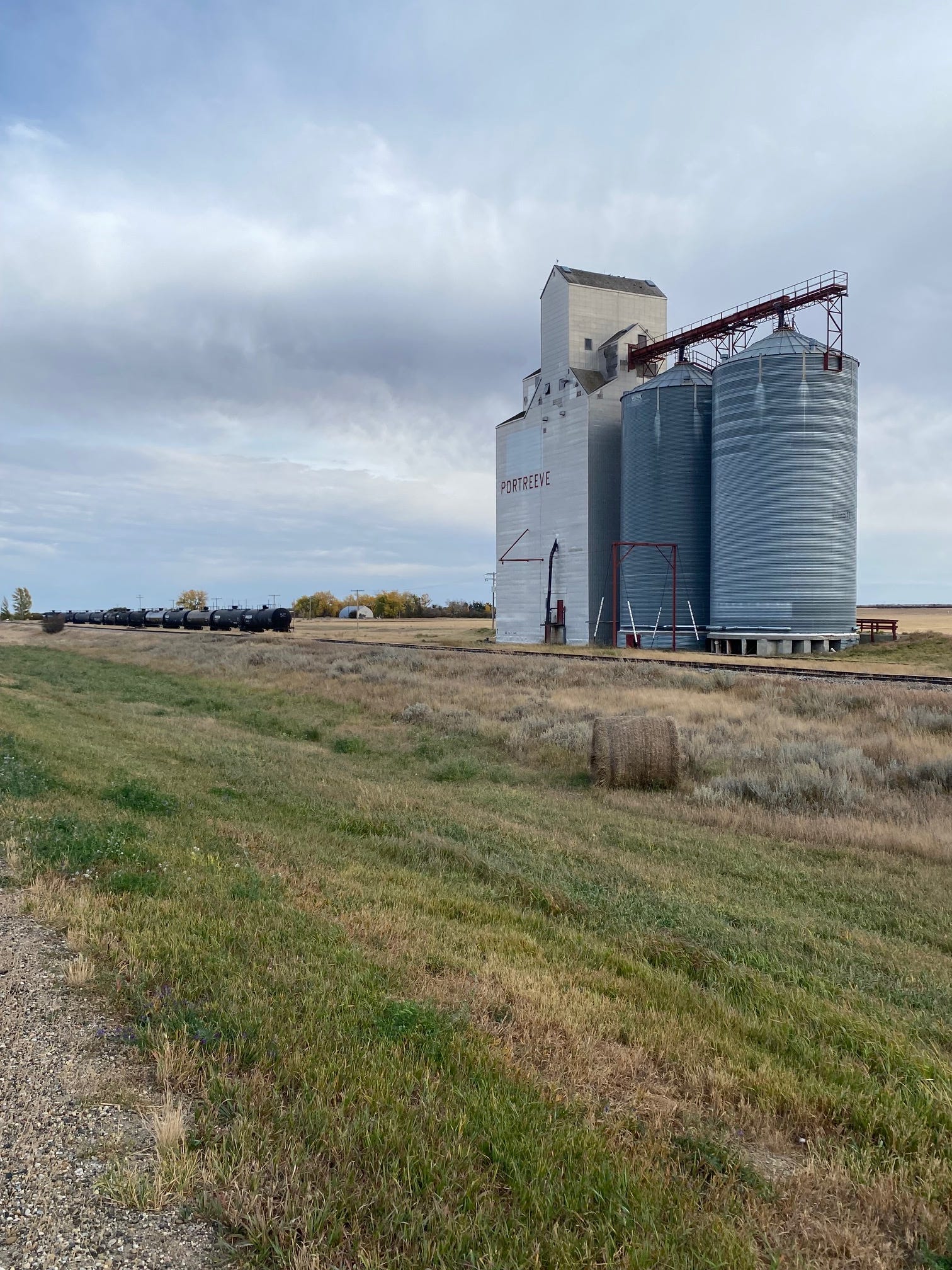
I turned west on Railway Avenue. The grain elevator stood like a sentinel against the pale sky, a massive white headstone marking the spot where a particular way of living was born, flourished for a while, and passed.
Like “🖤” this story and pat yourself on the back for reading 10,000 words!
Before you go:
Please click the 🖤 button, comment, share, and subscribe!
Ahh
The art of rendering an outhouse horizontal, and the stories of the families elders.
I really liked this column but am a little confused, Is it history or fiction?